This Czech lab Is dismantling china’s Rare-earth monopoly with… Tap water
In the world of rare-earth metals, recycling has always looked like mining in reverse: noisy, toxic, and expensive. Until now.
A team of chemists in Prague has managed to do what major industry players couldn’t: extract neodymium and its exotic cousins from old magnets using nothing more than water and a homebrewed molecule. No acid baths. No high-heat furnaces. No barrels of chemical sludge.
It sounds like the kind of science fair project that wins first prize and then disappears. Instead, it’s a patent-pending process already courting industrial partners—and it might reshape the rare-earth supply chain across Europe.
You can also read:
- Better late than never: a forgotten 1938 experiment just reshaped nuclear fusion research
- The machine that wants to swallow a star: Westinghouse joins ITER’s deep end
How do you recycle a magnet without breaking the planet?
Most of the magnets that power our smartphones, wind turbines, and electric cars contain neodymium, often spiked with dysprosium, praseodymium, or terbium. They’re strong, compact, and efficient—but also expensive and ecologically messy to produce.
Right now, 90% of the world’s rare earths come from China. And recovering them from used devices? That requires harsh acids, temperatures above 300°C, and a tolerance for environmental damage that Europe no longer finds acceptable.
Enter the IOCB in Prague (Institute of Organic Chemistry and Biochemistry). Their trick? Use water as the solvent, and let a tailor-made chelating agent do the hard work. This molecule, developed by PhD student Kelsea G. Jones, selectively binds to neodymium ions in a crushed magnet slurry. The neodymium then crystallizes out—cleanly—while other elements remain dissolved.
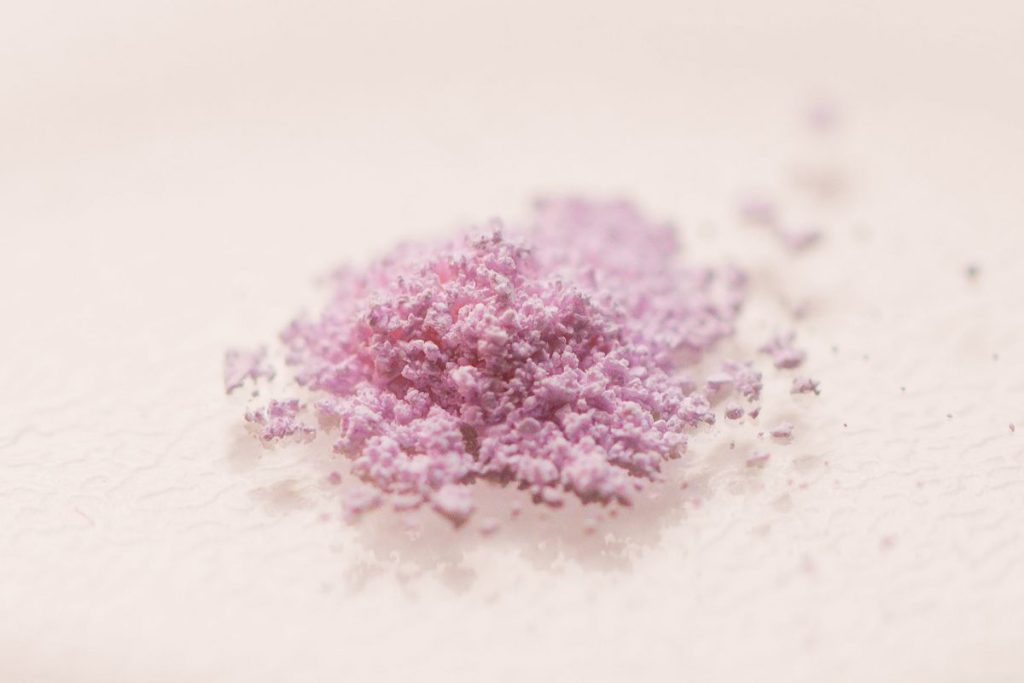
No vapor clouds. No heavy residue. Just a filtered powder, ready to reuse.
France breaks fusion record with Thales’ monster gyrotron—and it’s just getting started
Urban mining beats mountain blasting
This process fits into a growing movement called urban mining—the idea that cities are the new ore fields. One electric vehicle motor might contain dozens of grams of rare earths. A single data center, kilograms.
And those atoms? They don’t age.
As Miloslav Polášek, the project’s lead scientist, puts it: “Unlike plastic, chemical elements don’t degrade. Once you recover them, they’re as good as new.”
A neodymium atom can be recycled indefinitely, without losing any of its magnetic properties. So why dig deeper into the Earth when you can crack open your city’s junkyards?
A drop-in replacement for toxic methods
Here’s how the numbers stack up:
| Method | Solvents | Conditions | Toxic Waste | Estimated Cost ($/kg) |
|---|---|---|---|---|
| Conventional Recycling | Acids + organics | High temperature | High | 32–65 |
| IOCB Prague Process | Water + chelator | Room temperature | Minimal | 22–38 |
This isn’t just cleaner—it’s cheaper, too. If scaled, the Czech process could slash rare-earth recycling costs by up to 40%, while removing hazardous waste from the equation.
The team has already filed patents. Their tech transfer branch, IOCB Tech, is talking to manufacturers. “It’s only a matter of time,” says director Milan Prášil, “before this hits industrial scale.”
A rare-earth mystery buried in your EV
During teardown analysis of used electric motors, the Prague team stumbled onto a surprise: traces of holmium—a rare-earth element not listed in standard neodymium magnet formulations.
Why was it there? No one knows yet. It might be a supply chain substitution, a cost-cutting experiment, or simply a mislabeling error. Whatever the reason, it complicates recycling.
Because holmium behaves differently, current recovery methods don’t account for it. And that means today’s clean process may need to evolve further—to catch the hidden atoms engineers didn’t plan for.
A small trace element, a big industrial implication.
The market isn’t waiting
Rare-earth magnets are already a massive business. In 2024, the global market hit $46.5 billion. By 2034, it’s projected to reach $117 billion per year.
Driving this demand? Everything from EVs and drone motors to robot joints and wind turbine gearboxes. The global energy transition is magnet-hungry—and with more electrification comes more pressure to decouple from China’s dominant production.
Right now, Europe depends heavily on imports, making it vulnerable to price shocks and geopolitical tension. A method like Prague’s won’t just clean up waste—it could support regional resilience, by letting Europe mine its own trash.
Finland approves a nuclear reactor that doesn’t make electricity—and that might be the point
Recycling as infrastructure
If this all sounds like niche chemistry, think again.
Rare-earths are the unsung heroes of the green transition. They’re the bones inside the skeletons of electric vehicles, wind turbines, and high-efficiency electronics. Without them, energy systems get bulkier, weaker, or more wasteful.
Which means that inventing a better way to recycle them isn’t just a lab breakthrough—it’s a geopolitical chess move.
And if it starts with water, a beaker, and a molecule that hugs neodymium like a long-lost friend, all the better.
Sources:
Czech study:
Journal of the American Chemical Society
Cite this: J. Am. Chem. Soc. 2025, 147, 26, 22666–22676
https://doi.org/10.1021/jacs.5c04150
Published on June 19, 2025
Permanent magnets market:
https://www.gminsights.com/industry-analysis/permanent-magnet-market
Image:
Result of a separation process developed in Dr. Miloslav Polášek’s laboratory. Miloslav Polášek and his team processed a magnet from an electric car and obtained neodymium with 99.7% purity. (Photo: Tomáš Belloň/IOCB Prague)