A battery that breathes air, not lithium.
Germany is about to build the world’s first industrial-scale compressed air battery—and it’s going underground. Deep underground. In an ancient salt cavern larger than the Empire State Building, a new kind of energy storage system will quietly inhale surplus electricity and exhale it when the grid runs dry.
The project comes from Augwind, an Israeli company that specializes in Hydraulic Compressed Air Energy Storage (H-CAES). It’s part air compression, part water turbine, and all of it sits beneath the surface of northern Germany. No rare metals. No massive dams. No battery fires. Just air, water, and salt.
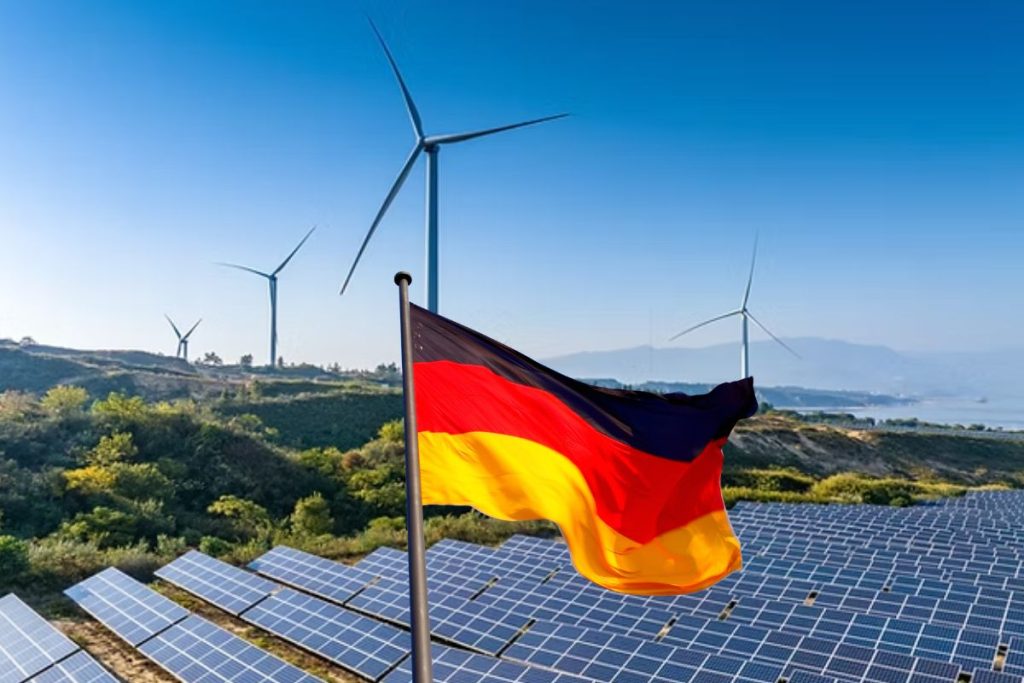
The goal? Solve a very German problem: the Dunkelflaute, or “dark lull”—those cold, windless winter weeks when solar panels sleep and wind farms stand still.
You can also read:
- An old report resurfaces after 20 years—and could make Mexico a global hydrogen powerhouse
- Finland approves a nuclear reactor that doesn’t make electricity—and that might be the point
A system built for grid survival
Here’s how it works: when wind and solar overproduce, electricity is used to compress air into an underground salt cavern. The pressure builds. When demand spikes, that air is released back to the surface, where it flows through a water chamber and spins a turbine.
That’s it. No electrolyzers. No thermal batteries. Just mechanical energy cycling through a geological vault. The cavern itself acts as a natural pressure tank, eliminating the need for steel or concrete enclosures.
And these caverns are gigantic—some are capable of storing between 3 and 8 gigawatt-hours of energy. That’s enough to power tens of thousands of homes for days at a time.
France breaks fusion record with Thales’ monster gyrotron—and it’s just getting started
A serious contender in the storage race
Traditional lithium-ion batteries are great—for hours, not weeks. But when it comes to long-duration storage, compressed air has two big advantages: cost and stability.
While a lithium-ion system might cost $160 to $215 per kilowatt-hour and degrade over time, the AirBattery operates at around $11 to $16 per kilowatt-hour, depending on duration. More importantly, it can retain energy for weeks or even months without significant loss.
And unlike chemical batteries, it doesn’t need cobalt, lithium, or nickel—minerals that are expensive, geopolitically risky, and hard to recycle.
Salt, turbines, and industrial logic
Germany is betting on storage systems that can absorb excess electricity from wind farms in the north and release it when the southern industrial zones need it. Right now, this requires massive north-south transmission lines. But with localized storage like AirBattery, you store where you generate, cutting the need for thousands of miles of high-voltage cable.
The AirBattery’s round-trip efficiency (how much of the input electricity you can recover) is currently at 47% in pilot setups, with a target of 60% for full-scale systems—on par with gas turbines, but with zero CO₂ emissions.
And because it uses existing salt formations, there’s no need for deforestation or new excavation. Just plug into what geology already gave us.
Cheaper, cleaner, and geopolitically stable
One of the system’s biggest draws is its immunity to raw material supply chains. No child labor in cobalt mines. No price shocks tied to rare earth elements. No shipping lanes vulnerable to geopolitical conflict.
This stability is a big reason why the concept was certified as technically and economically viable by Fichtner Group, one of Germany’s top engineering consultancies.
The first full-scale plant is scheduled to come online by 2027 or 2028. If it succeeds, similar salt cavern projects could pop up in France, the Netherlands, or Poland—anywhere there’s salt and a need to store renewable power.
Salt is the new lithium
It’s a bit ironic: for years, salt caverns were known as places to store nuclear waste or extract brine. Now, they might be the lungs of the renewable energy grid—inhaling excess electrons when the wind blows and exhaling power during the dark winter calm.
It’s clean, quiet, underground—and scalable. In a world racing toward 50% or more renewables on the grid, storage is the bottleneck. And Germany’s salt battery might just be the missing link.
Comparing major energy storage technologies
| Technology | Storage Duration | Estimated Cost (USD/kWh) | Environmental Impact | Critical Resources |
|---|---|---|---|---|
| Lithium-ion batteries | 4 to 6 hours | $160 to $215 | High (mining, recycling issues) | Lithium, cobalt, nickel |
| Pumped hydro storage | 6 to 20 hours | $21 to $53 | Significant land use | Water, elevated terrain |
| AirBattery (salt cavern) | Weeks to months | $11 to $16 | Low (uses existing caverns) | None |
| Green hydrogen | Weeks to months | $53 to $85 | High (energy-intensive production) | Electrolyzers, purified water |
No cobalt. No carbon. No combustion. Just salt, air, and time. The AirBattery could become one of the quiet champions of the energy transition—breathing life into the grid when the sky refuses to cooperate.
Source: https://www.aug-wind.com/airbattery