Norway’s bold bet on floating nuclear power.
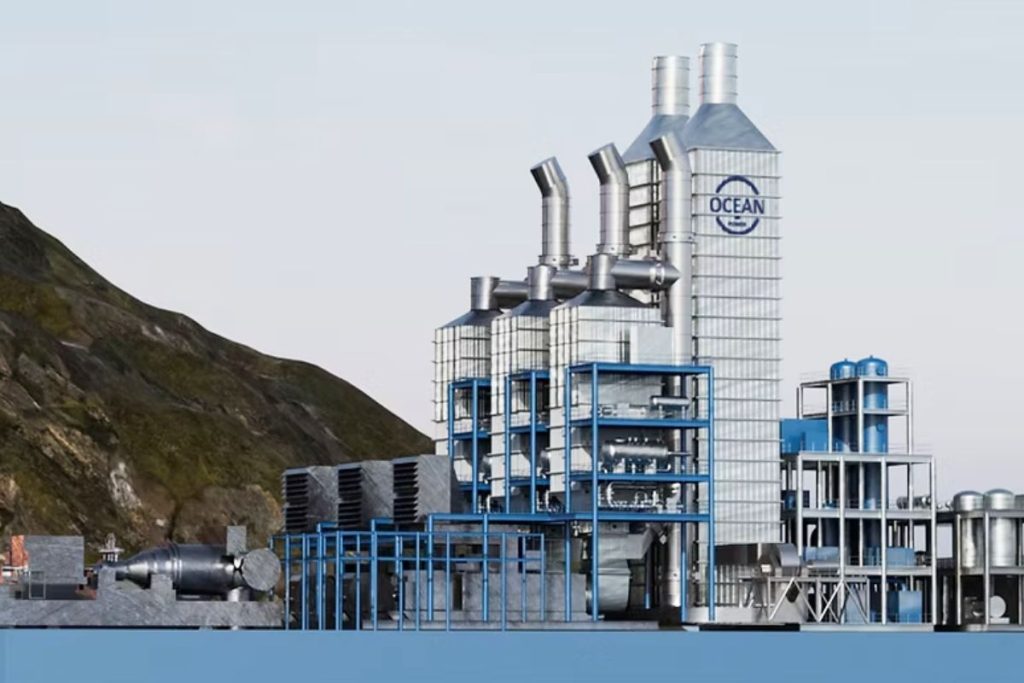
Norway, long proud of its hydropower dominance, is preparing to re-enter the global energy spotlight. Two homegrown players — Norsk Kjernekraft, a nuclear project developer in Bergen, and Ocean-Power AS, an offshore electricity specialist from Ronglan — have signed an agreement to design floating nuclear power plants. Each platform would host a 200–250 megawatt small modular reactor (SMR), built to supply heavy industry and offshore facilities where stable power is most needed.
For a country where more than 91% of electricity came from hydropower in 2024, with another 7% from wind and barely 1% from gas or thermal plants, this marks a sharp turn. Nuclear has been absent from the Norwegian grid for decades. Hydropower covered domestic needs well enough — until industry’s appetite grew, transport electrification accelerated, and the North Sea oil sector began its own push toward decarbonization.
Now the government faces a paradox: a green electricity system stretched to its limits, just as demand spikes.
You can aslo read:
- This Scandinavian startup wants to power the world with a nuclear reactor the size of a shipping container
- Russia’s plan to haul LNG under the ice with nuclear-powered submarines
A power plant on a barge for Norway
The concept hinges on the small modular reactor, a new class of compact, factory-built units designed for safer, cheaper deployment. Place one on a non-propelled barge, tow it into position, plug it into the grid or a factory, and it becomes a mobile nuclear station.
This mobility suits Norway’s geography. With 1,600 miles of jagged coastline, scattered fjords, and offshore installations, fixed plants are often impractical. A floating SMR could moor near an energy-hungry aluminum smelter or even replace fossil-fuel generators on oil platforms in the North Sea.
Jonny Hesthammer, CEO of Norsk Kjernekraft, calls it “an important step in the right direction to ensure a long-term nuclear commitment in Norway, involving the best of Norwegian industry.”
Each barge, at 200–250 MW, would deliver enough electricity for about 200,000 households — though in practice, the targets are industrial, not residential.
Europe’s Most Important Reactor You’ve Never Heard Of Just Took a Major Step Forward
Zero land footprint, steady output
Beyond flexibility, the floating concept has other advantages. It doesn’t consume land, a growing concern in densely populated or environmentally sensitive areas. And unlike wind or solar, it delivers continuous output, regardless of weather.
Ocean-Power plans to combine the SMRs with carbon capture systems for natural gas turbines in hybrid platforms. Exhaust gases would be trapped, compressed, and either injected into geological formations or liquefied for transport. The nuclear core, however, remains the centerpiece: clean power with no fossil feedstock at all.
A snapshot of the Norwegian plan:
| Feature | Detail |
| Unit capacity | 200–250 MW |
| Reactor type | SMR, factory-built |
| Platform | Barge without propulsion |
| Target use | Offshore platforms, coastal industry |
| Location focus | North Sea, fjords, industrial ports |
| CO₂ capture (hybrid) | Yes, storage or transport |
| Partners | Norsk Kjernekraft + Ocean-Power |
Norway’s maritime know-how
Norway’s maritime industry has spent decades building ships and platforms for the rough North Atlantic. That expertise — in hull design, corrosion resistance, offshore logistics — now translates into nuclear infrastructure.
Erling Ronglan, CEO of Ocean-Power, argues the combination of nuclear and maritime engineering could give the Nordics a global lead: “Nuclear power on barges opens entirely new possibilities for secure, stable, and climate-friendly energy supply — for industry, society, and maritime operations.”
The project is not just national. Both companies envision an export market, with Norway supplying nuclear barges to countries too small or resource-limited to build conventional nuclear plants.
Joining the global fleet of floating reactors
Norway is not alone in this venture. Around the world, at least half a dozen projects are pursuing nuclear-at-sea:
| Project | Country | Status | Power | Reactor type | Main use |
| Akademik Lomonosov | Russia | In service since 2019 | 70 MW | 2 × KLT-40S | Electricity and heat for Arctic town Pevek |
| NuScale SMR on barge | United States | Concept phase | 77 MW | NuScale SMR | Coastal bases, industry |
| Seaborg CUBE | Denmark/Korea | Prototype in 2026 | 100 MW | Molten salt reactor | Small nations without land-based nuclear |
| ThorCon | Indonesia | Planned after 2030 | 500 MW | Molten salt reactor | Archipelago power supply |
| China National Nuclear | China | Preliminary study | 100–200 MW | ACP100 SMR | Islands and coastal zones |
| Samsung/Seaborg | Korea/Denmark | Agreement signed 2023 | Up to 800 MW | MSR + hybrid modules | Series-built barges for industry/governments |
Russia’s Akademik Lomonosov, moored in the Arctic since 2019, already proved the model works. Seaborg’s molten-salt design could soon follow. Norway’s advantage lies in timing: it can adopt lessons from these pioneers while deploying its own maritime skill set.
Nuclear: a handshake in Washington that could power the future
A nuclear pivot for a hydro giant
The larger context is Norway’s economic transition. Oil revenues are waning, but industrial demand for low-carbon electricity is climbing. Floating SMRs are pitched as a bridge technology: fast to deploy, highly flexible, and aligned with climate commitments.
If feasibility studies confirm safety, cost, and regulatory compliance, the barges could anchor a new era of Norwegian energy exports — this time not oil, but carbon-free kilowatts.
At the same time, Ocean-Power is exploring molten-salt reactors with Copenhagen Atomics, pointing to a diversified nuclear future. For now, though, the floating SMR stands as Norway’s most visible gamble — a nuclear comeback staged not on land, but at sea.
Source: https://www.norskkjernekraft.com/norsk-kjernekraft-og-ocean-power-inngar-samarbeidsavtale-om-flytende-kjernekraftlosninger