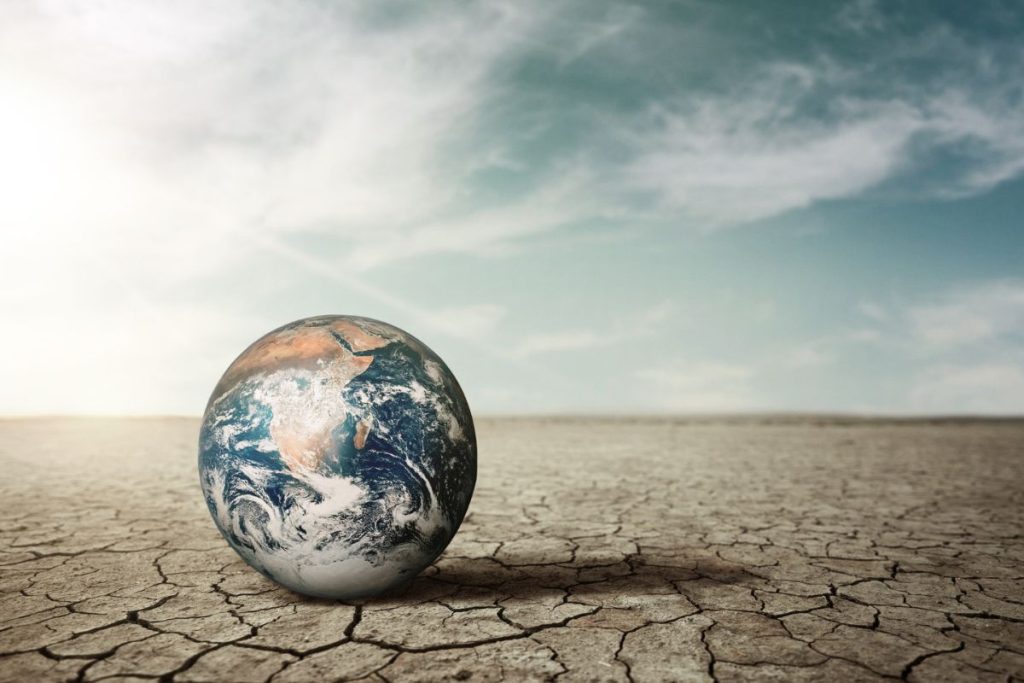
We had one job. One number to stay under. One red line drawn at 1.5°C. Now scientists say we’ve already crossed it — and we’re not slowing down.
According to a new report from an international team of over 60 scientists, the window to keep global warming below 1.5°C has officially slammed shut. Greenhouse gas emissions hit a record-smashing 55 billion metric tons in 2023, and early signs suggest 2024 was just as bad — if not worse.
At this pace, we’ll burn through the last of our remaining carbon budget for the 1.5°C target by 2028. That’s just over three years away.
So now what?
You can also read:
- Turning plastic into power: the solar trick hidden in your trash
- Germany is burying a battery the size of a skyscraper—inside a salt cave !
The world keeps warming — and so do the numbers
The latest findings, published in Earth System Science Data, aren’t just statistics. They’re a roadmap to the edge of the cliff.
In 2024, the global average temperature rose 1.52°C above pre-industrial levels — a number that used to be unthinkable. Even when you strip away short-term climate wobbles like El Niño, the long-term trend is undeniable: human-driven warming hit 1.36°C this year, and it’s rising fast.
Over the past decade, we’ve been adding 0.27°C every ten years. That’s not a gentle slope. That’s an escalator on fire.
An old report resurfaces after 20 years—and could make Mexico a global hydrogen powerhouse
How much time do we have left? Not much
Remember the idea of a carbon budget — the total amount of CO₂ we can emit while staying under 1.5°C of warming? As of early 2025, that budget is down to just 130 billion metric tons.
Sounds like a lot? It’s not. At our current pace, we’ll blow through that limit by 2028.
Here’s what the numbers look like:
| Climate Metric | Value |
|---|---|
| Greenhouse gas emissions in 2023 | 55 billion metric tons of CO₂eq |
| Warming in 2024 (vs. 1850–1900) | 1.52°C |
| Human-caused warming in 2024 | 1.36°C |
| Remaining carbon budget for 1.5°C | 130 billion metric tons CO₂ |
| Time left at current emissions rate | 3.2 years |
Even the most generous projections show we’ll need to hit net-zero CO₂ emissions from fossil fuels and deforestation to stop the heating. Anything less? We’re just prolonging the spiral.
The ocean’s rising — and it’s not stopping
This warming doesn’t just mean hotter summers or freak storms. It’s physically reshaping Earth’s systems.
The oceans have soaked up much of our excess heat — but that’s come with a cost. Since 1901, sea levels have risen 22.7 centimeters, and the pace is quickening. Between 2019 and 2024 alone, they jumped another 26 millimeters — way faster than the average 1.8 mm/year we saw through most of the 20th century.
And this isn’t some distant threat to tropical islands. It’s a creeping flood aimed at New York, Miami, Amsterdam, and every coastal city that thought it had time.
The hidden heat trap: cleaning the air
There’s another cruel twist. In recent years, countries have made real progress in cutting sulfur dioxide emissions — a major air pollutant. Great for human health. Not so great for global temperature.
Those sulfur particles used to reflect sunlight, offering a kind of accidental “parasol” effect. Now that we’ve cleaned up the air, we’re feeling the full heat of our CO₂ emissions, with nothing to shield us.
It’s like taking off your sunglasses at high noon. Everything feels hotter — because it is.
Methane: the last pressure valve?
There is one area where we could buy some time: methane. Unlike CO₂, which sticks around for centuries, methane breaks down after about 12 years. That means cuts today could slow down warming in the next decade — even if they can’t reverse the trend.
But this isn’t a get-out-of-jail-free card. It’s a temporary release valve on a boiler that’s already redlining.
229 years without a plug: the Ingenious pump that defies modernity
So what now?
The 1.5°C target wasn’t just a number. It was a boundary between two versions of the future. One with painful changes. The other with unthinkable ones.
Now, we’re headed straight toward 2°C — and beyond — unless the world radically changes course. That means:
-
No more fossil fuel expansion.
-
Immediate cuts in methane and deforestation.
-
Massive investment in adaptation.
-
Serious conversations about climate justice and resilience.
This isn’t about polar bears anymore. It’s about food security, mass migration, economic collapse, and global health. It’s about your hometown. Your retirement. Your kids.
We’ve crossed 1.5°C.
What happens next is still in our hands. But we’re out of time to keep pretending.
Source: https://www.cea.fr/Pages/actualites/environnement/limiter-le-rechauffement-desormais-plus-atteignable.aspx