
Behind your mango lies a vanishing ecosystem.
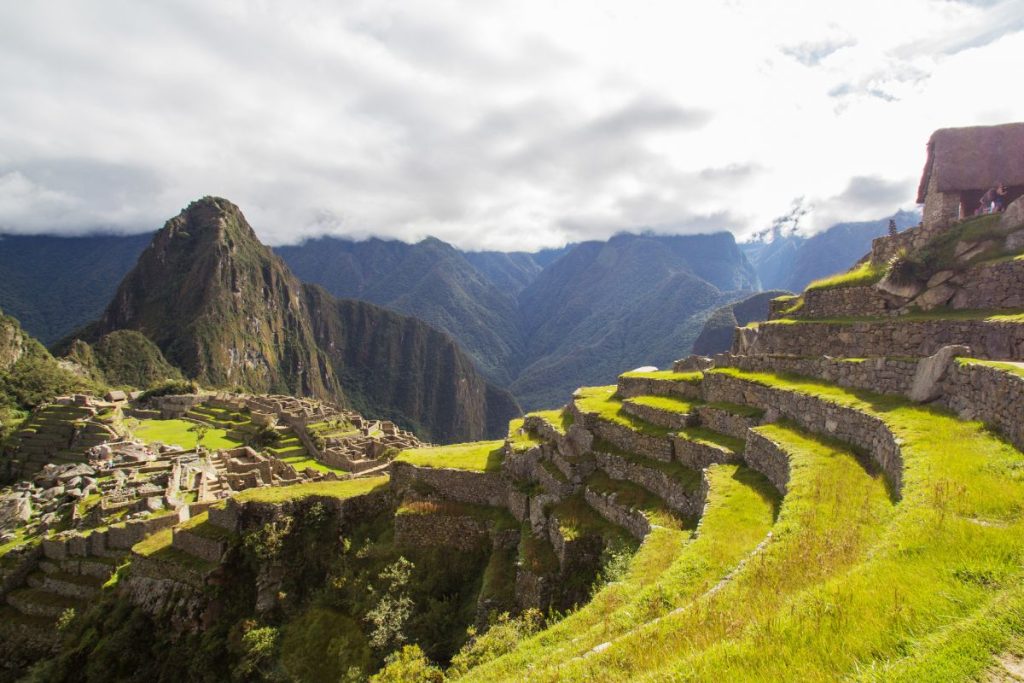
Your morning avocado toast and evening chocolate bar might trace their roots back to steep Andean terraces or humid Amazonian patches where farmers, often anonymous, still grow crops by hand.
But these food chains are fraying. In Peru, small-scale farmers—who form the backbone of the nation’s agriculture—are confronting the full force of climate disruption. Think scorching heat, floods, dry spells, and melting glaciers all in one decade.
It’s not just crops that are under pressure. Centuries-old knowledge systems, community-run irrigation, and fragile ecosystems are being shaken to the core.
Now, a group of economists is digging deep into data—monthly, not yearly—to understand just how violent these climatic shocks are… and what they cost Peru.
You can also read:
Farming on the edge of the world
The geography of Peruvian agriculture is stunning—and challenging.
- On the coast, large-scale irrigated farming feeds export markets.
- In the Andes and Amazon, small farmers grow traditional staples: quinoa, maize, potatoes, and more.
Over 3,000 potato varieties exist in Peru, many cultivated by Andean communities with ancestral knowledge of climate and soil.
But heatwaves are creeping higher, forcing farmers to move crops uphill, into lands that are less fertile and sparsely populated. Competition for arable land is growing. So is food insecurity.
Meanwhile, tropical lowlands—rich in cocoa, coffee, and fruit—are seeing erratic rains, flooding, and warming that destabilize ecosystems with each passing season.
A new lens on climate shocks
Cédric Crofils, Ewen Gallic, and Gauthier Vermandel, three economists, used a rare dataset from Peru’s Agriculture Ministry, collected monthly between 2001 and 2015, to monitor fluctuations in temperature and rainfall.
Why monthly? Because tropical agriculture doesn’t follow a single growing season like in Europe. Crops are harvested year-round. Only fine-grained data can capture the shocks.
Their approach: measure the “anomalies”—deviations from the normal monthly maximum temperatures and rainfall.
The result: every significant anomaly leads to lower harvests, especially for rice and maize. Worse, the effects are long-lasting—harvests don’t bounce back the month after the storm.
Potatoes in peril—and a GDP hit
Take the iconic Andean potato. Its production surged from 2014 to 2022, only to plummet 10% in 2023 after extreme weather events.
Across the four studied crops—rice, maize, potatoes, and cassava—the researchers found that each shock leads to a drop of 8–15% in production.
That’s not just a problem for dinner plates. It’s an economic dent: a 0.1% decrease in Peru’s GDP, where agriculture still represents 7.2% of the economy and 16.5% of total exports.
And in a country already grappling with inflation and falling trade revenue, every lost hectare matters.
Climate shock impact on key crops in Peru
| Crop | Typical Region | Impact of Climate Shock | Recovery Time |
|---|---|---|---|
| Rice | Amazon Basin | -15% yield during anomalies | Several months |
| Maize | Highlands & Jungle fringes | -12% yield | Moderate |
| Potato | Andean Highlands | -10% in 2023 | Slow recovery |
| Cassava | Lowland tropics | -8% | Varies by soil |
The state steps in—sort of
The Peruvian government isn’t sitting idle.
Efforts are underway to:
- Promote drought-resistant crops
- Expand soil conservation techniques
- Build local irrigation systems
- Improve weather data access for farmers
There’s talk of reforestation and water management projects, and national adaptation plans now factor in climate variability as a macroeconomic risk.
Yet, structural change is slow. Most farmers lack the tools or financing to shift practices. They still rely heavily on unpredictable rainfall and ancient farming calendars—calendars that nature is no longer following.
Data is power—especially in the tropics
Why does this research matter?
Because tropical agriculture is still vastly under-studied. Most global climate models and economic forecasts rely on temperate climate data, which doesn’t apply to multi-crop, year-round growing systems.
The Peruvian dataset—monthly and detailed—offers a blueprint for how to design smarter climate policy in vulnerable zones.
It also reveals which crops are most at risk, helping governments prioritize support and subsidies.
And perhaps most importantly, it shines a light on the resilience of indigenous knowledge systems.
Ancient wisdom meets 21st-century risk
Andean communities aren’t just victims. They’ve been adapting for centuries.
Take:
- Amunas – pre-Inca water systems that store rainwater underground
- Gravitational irrigation, managed collectively by villages
- Seed conservation and crop rotation to maintain genetic diversity
These practices deserve global recognition and support. Not just as cultural relics, but as living tools in the battle against a chaotic climate.
If Peru can bridge scientific insight, economic modeling, and ancestral resilience, it may not just save its crops—it might offer the world a survival strategy.
Because what’s unfolding in the Andes today is a preview of tomorrow for many parts of the globe.7
Source:
Crofils, C., Gallic, E., Vermandel, G., 2025. « The dynamic effects of weather shocks on agricultural production ». Journal of Environmental Economics and Management, 130, 103078.