The torus begins to take shape.
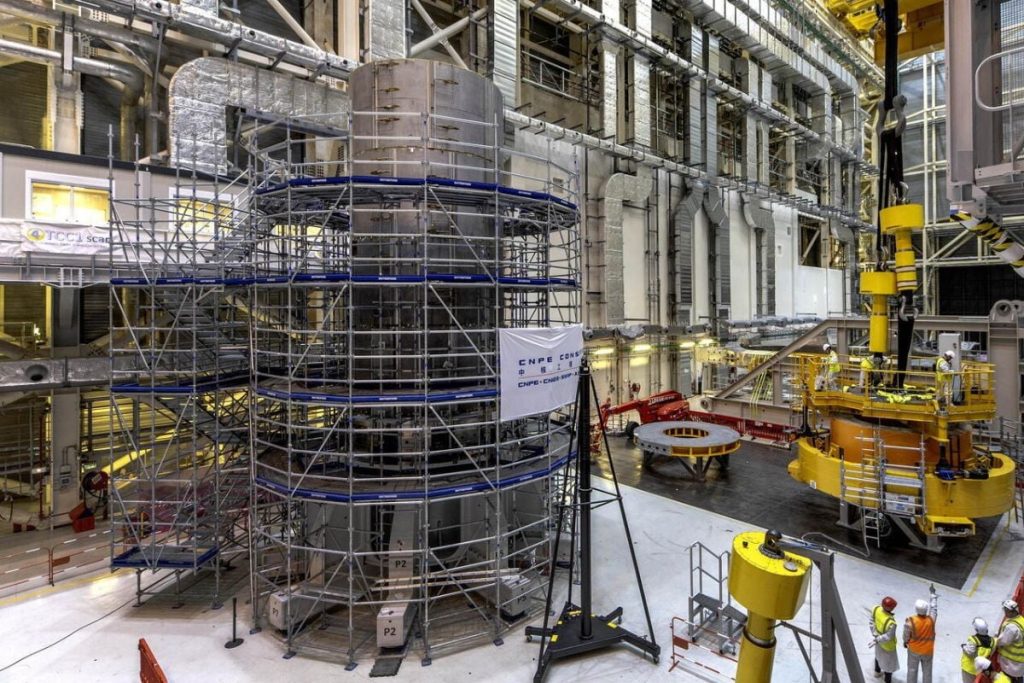
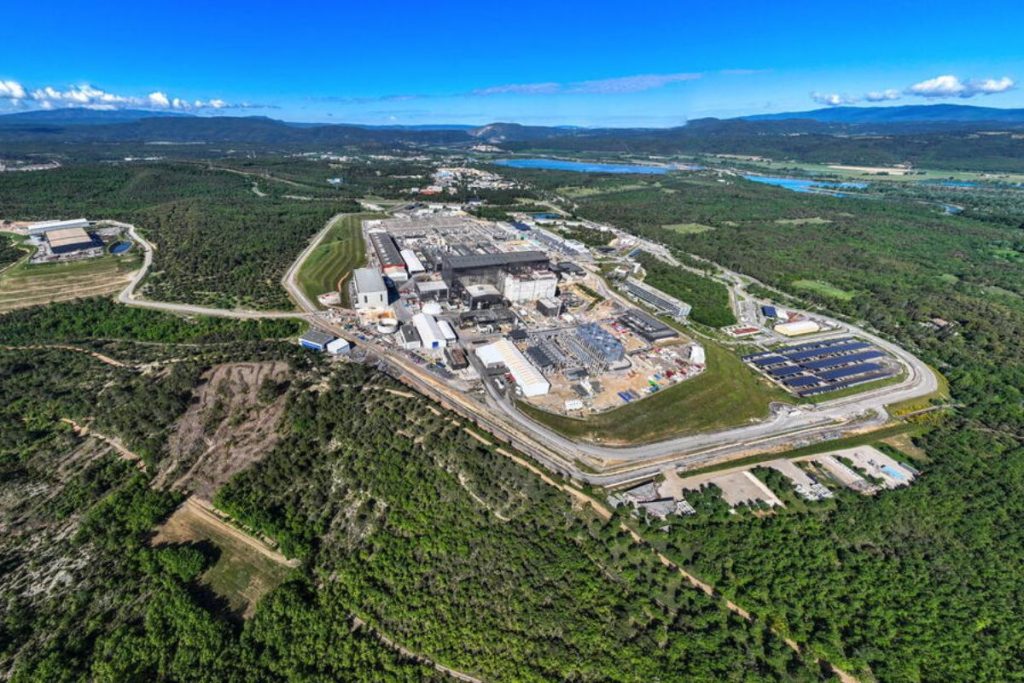
In the pine-scented hills of southern France, on a site carved from bedrock near Cadarache, engineers are preparing to weld together a structure unlike any built before. This is the torus of ITER—the circular, stainless steel heart of a machine designed to trap and tame a miniature star.
The job now falls to Westinghouse Electric Company, freshly contracted for $193 million to assemble the tokamak’s vacuum vessel—a massive, donut-shaped chamber that must be stitched together from nine steel segments, each weighing over 880,000 pounds. Once complete, it will be the stage where hydrogen nuclei are heated to over 270 million degrees Fahrenheit and coerced into fusion.
To picture it properly, imagine balancing a ring of freight trains above a chasm while welding in a cleanroom. The alignment must be micron-perfect. And when done, not a single particle of air should be allowed in—or out.
This is not architecture. It’s astrophysics with a blowtorch.
You can also read:
- America ships a 60-foot magnetic giant to France: the unseen backbone of the ITER fusion reactor
- France breaks fusion record with Thales’ monster gyrotron—and it’s just getting started
From component to cathedral
Westinghouse is not stepping into this blind. Alongside Italian firms Ansaldo Nucleare and Walter Tosto, it has been co-designing and building five of the nine sectors over the past decade under the AMW consortium. The company knows the tolerances. It knows the pitfalls. Now, it must become the conductor for a mechanical symphony of welding, stress analysis, magnetic field compensation, vibration dampening, and ultrasonic inspection.
What’s at stake is not just geometry, but the integrity of a chamber that will hold a cloud of plasma spinning at thousands of miles per hour—without ever touching the walls.
This is ITER’s beating heart. And now it’s being built.
Better late than never: a forgotten 1938 experiment just reshaped nuclear fusion research
35 countries, one impossible goal
It’s tempting to call ITER a French project, but that’s like calling the International Space Station a backyard shed.
This machine is the work of 35 countries—including the United States, China, Russia, India, Japan, and South Korea—all of them contributing components, scientists, and funding. It’s a kind of United Nations of plasma physics, held together not by treaties but by stainless steel and superconducting magnets.
Together, they’re chasing one hypothesis: that fusion can work on Earth, not just in stars. And not just in short bursts, but with enough control and yield to fuel cities.
ITER won’t produce electricity. It’s a testbed, a demonstrator. A machine meant to prove the math works. The eventual goal is to output 500 megawatts of thermal energy from just 50 megawatts of input—a tenfold return. That energy won’t be harvested. It will be studied.
Deadlines come and go. Fusion doesn’t care.
Construction on ITER began in 2010. The first plasma run was planned for 2018. Today, in 2025, we’re watching the torus finally take shape.
Why the delay?
Because fusion is not forgiving. Every component must meet specifications that make spaceflight seem casual. A tolerance breach of just 1 millimeter can unravel years of work. Cryogenic systems must cool the magnets to -452°F. Diagnostics must operate inside a radiation-soaked vacuum. And then there’s the physics itself: wrangling plasma hotter than the Sun inside magnetic fields shaped like pretzels.
New timelines suggest the first real fusion experiment—using deuterium fuel—may happen around 2035. Between now and then, the entire reactor must be assembled like a multi-national nuclear jigsaw, integrating magnets from Japan, ports from Korea, and cooling systems from Germany.
The torus is step one. And it took fifteen years to get here.
The diplomacy of the atom
In many ways, ITER is a story not just of physics, but of patience.
Every country delivers its parts to Cadarache in shipping containers—components the size of houses—which must then be unpacked, inspected, tested, and coaxed into place. Differences in standards, in measurements, in interface design: all must be resolved onsite.
ITER is Lego for nations, except every piece costs millions, weighs tons, and must be aligned to the width of a human hair.
There is something heroic about this. Something deeply human. Not just for the challenge of holding fusion on Earth, but for the act of coordinating so many moving pieces across cultures, languages, and engineering philosophies.
It’s not fast. It was never going to be. You don’t bottle a star by rushing it.
The numbers behind the ambition
Here’s what ITER looks like by the numbers:
| Metric | Value |
|---|---|
| Total estimated cost | $23.6 billion |
| Participating nations | 35 |
| Target fusion power output | 500 megawatts |
| Input energy | 50 megawatts |
| Torus diameter | 62 feet |
| Weight of the vacuum vessel | 11 million pounds |
| First full fusion test | Expected in 2035 |
Each segment of the vacuum vessel weighs about 440 tons, and the entire machine will span over 70 feet in height once assembled. When operational, the internal plasma will reach temperatures six times hotter than the Sun’s core.
Westinghouse’s job is to ensure that this happens inside a chamber that leaks nothing, cracks never, and holds steady under forces that would snap aircraft carriers.
ITER may still be years away from ignition, but this new phase—the welding of the torus—marks the beginning of the end of the beginning.
We’re not chasing stars. We’re inviting them in.
Source: Westinghouse
Image : Cadarache in France (credit: ITER°