Lead, Plutonium, and a Bit of Italian Flair: France Quietly Bets on Modular Nuclear.
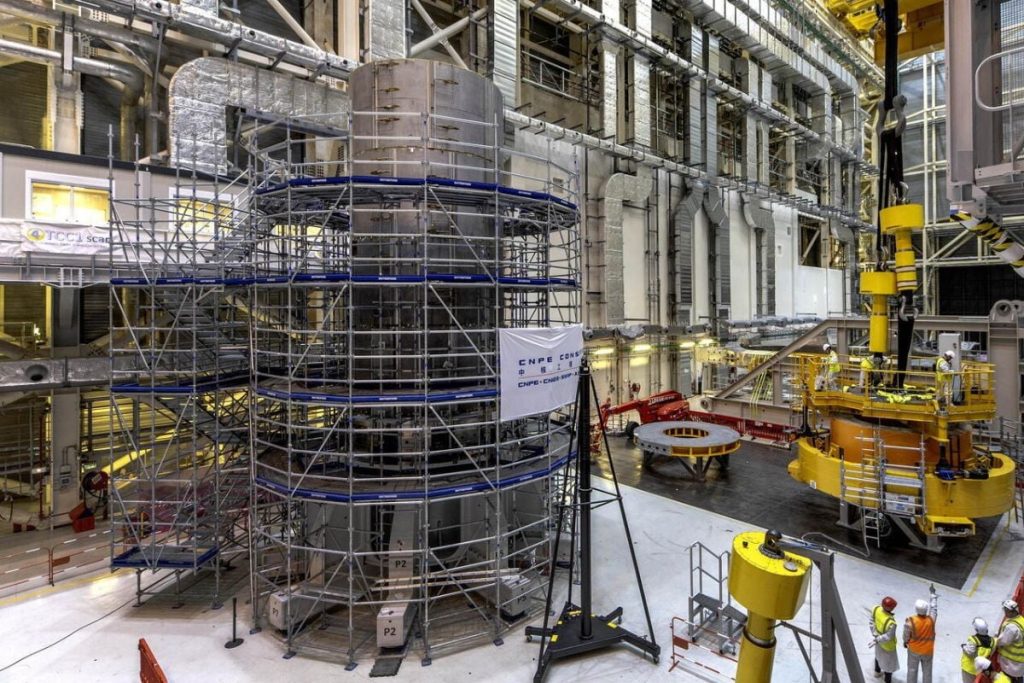
While headlines still shout about ITER’s budget black hole and the spiraling costs of EPR2 reactors, a quieter, leaner story is unfolding between France and Italy. On June 19, 2025, French startup Newcleo and Italian engineering firm Nextchem signed an agreement that might reshape the nuclear landscape—without ever needing a fusion breakthrough or a concrete dome the size of a football stadium.
At the heart of the deal is the LFR-AS-200, a modular nuclear reactor cooled not by water but by liquid lead, compact enough to fit inside two gymnasiums, and powerful enough to provide electricity to 150,000 people. It doesn’t chase moonshots. It just works—on paper, at least.
You can also read:
- A major first for this next-generation French nuclear reactor, which has become the first to obtain the demanding UK GDA certification
- China takes the lead in modular nuclear reactors—years ahead of the West
Not steam, but molten lead for France ?
Most nuclear reactors boil water. The LFR-AS-200 does not. Instead, it uses liquid lead as a coolant, circulating it through the reactor core where it absorbs heat, then transferring that heat to a steam turbine.
Why lead? For one, it doesn’t boil until it hits 3,180°F (1,749°C), making it incredibly stable under stress. Also, it doesn’t need to be pressurized, reducing the risk of explosive failure.
And the reactor’s fuel? A recycled cocktail known as MOX (Mixed Oxide Fuel), made from plutonium and reprocessed uranium. The LFR-AS-200 is built not to create new nuclear waste, but to burn what we’ve already stockpiled. It’s nuclear circular economy in action.
The dream of wireless power is back—and this time, it might actually work !
AMR vs. SMR: Know your acronyms
Before going deeper, a brief detour into nuclear jargon:
- SMR (Small Modular Reactor): Any reactor under 300 megawatts, designed for factory assembly and quick on-site installation. Think NuScale’s VOYGR or Rolls-Royce’s modular plant.
- AMR (Advanced Modular Reactor): A smaller subset of SMRs that use non-conventional cooling and fuel systems—like liquid lead, molten salt, or high-temperature gas. These reactors often promise better thermal performance and fuel flexibility.
In short:
- All AMRs are SMRs,
- But not all SMRs are AMRs.
Newcleo’s LFR-AS-200 is firmly in AMR territory. It’s compact, modular, and entirely unlike the hulking pressurized water reactors France currently operates.
The Italian muscle behind the metal
On the Italian side, the heavy lifting will come from Nextchem, an industrial engineering powerhouse and part of the Maire Group. The companies are forming a joint venture—NextCleo—with 60% owned by Nextchem and 40% by Newcleo. Additionally, Nextchem takes a 1.25% equity stake in Newcleo, with an option to rise to 5% depending on project milestones.
Nextchem won’t handle neutrons. Its job is to design and build the “conventional island”—everything outside the reactor core: turbines, generators, cooling loops. In short, they’ll turn nuclear heat into usable megawatts.
They’ll also coordinate project phases, industrialize the architecture, and support other AMR developers. Think of them as the nuclear IKEA of Europe, but with better instructions.
The road ahead: faster than you’d think
The plan, while ambitious, is refreshingly clear:
- 2026: Build a full-scale, non-nuclear prototype in Italy to test hardware without any radioactive materials.
- 2029: Final investment decision on the first operational site.
- 2031: Commission the first full reactor in France.
To accelerate the timeline, Newcleo plans to build on existing nuclear sites—for example, a MOX fuel plant in Nogent-sur-Seine, close to a current power station. That means fewer permits, less construction, and a head start on logistics.
Smart. Quiet. Efficient.
Slovakia, Bohunice, and post-Russian independence
While French and Italian engineers sign the blueprints, other European nations are already queuing up. In Slovakia, Newcleo has partnered with Javys, the national nuclear waste agency, to explore deploying up to four LFR-AS-200 reactors at the Bohunice nuclear site.
Why Slovakia? Because it already produces over 50% of its electricity from nuclear, has an experienced workforce, and desperately wants to untangle its energy grid from Russian gas dependencies.
Using an old site with a grid already in place means the first reactor could come online faster—and more cheaply—than a greenfield project.
Leadership reshuffled, investors watching
To steer the company through the coming growth, Newcleo has reshaped its leadership. Founder Stefano Buono stepped aside as chairman, handing the reins to Andrea Ruben Levi. Buono stays on as CEO, but the move signals a shift toward investor transparency—and possibly a future IPO.
This matters. Scaling even a small reactor requires hundreds of millions of dollars. Newcleo will need deep-pocketed allies and political backing. A cleaner cap table and clearer governance help pave that road.
Lead is heavy—and so are the challenges
So far, so good. But AMRs are not magic.
Lead, while thermally stable, is chemically aggressive. It corrodes metals and requires exotic alloys to keep pipes from dissolving. If lead exposed to the reactor core leaks, it can become radioactive, complicating containment and cleanup.
MOX fuel also isn’t a walk in the park. Because it contains plutonium, its production is subject to strict international regulation. MOX factories require hardened security and multiple redundant safety systems.
And then there’s cost. Newcleo’s reactor, while small, still comes with a price tag between $960 million and $1.4 billion—cheaper than an EPR (estimated $14 to $16 billion each), but far from affordable for small utilities.
A smaller bet with a clearer payoff?
Which brings us back to the big French gamble.
The ITER fusion experiment is now past $27 billion, with results decades away. The EPR2 program, once hailed as France’s nuclear revival, now has a projected cost of $108 billion for the first six reactors.
Newcleo’s reactor won’t change the world overnight. It won’t create plasma or power a continent. But it might light up a midsized city with recycled fuel, in less than 10 years, from a footprint the size of a schoolyard.
Maybe that’s not “grandiose.” But it’s realistic. And in the nuclear world, where timelines stretch for decades and budgets balloon like gas giants, realism is a rare commodity.
Source: Newcleo press release
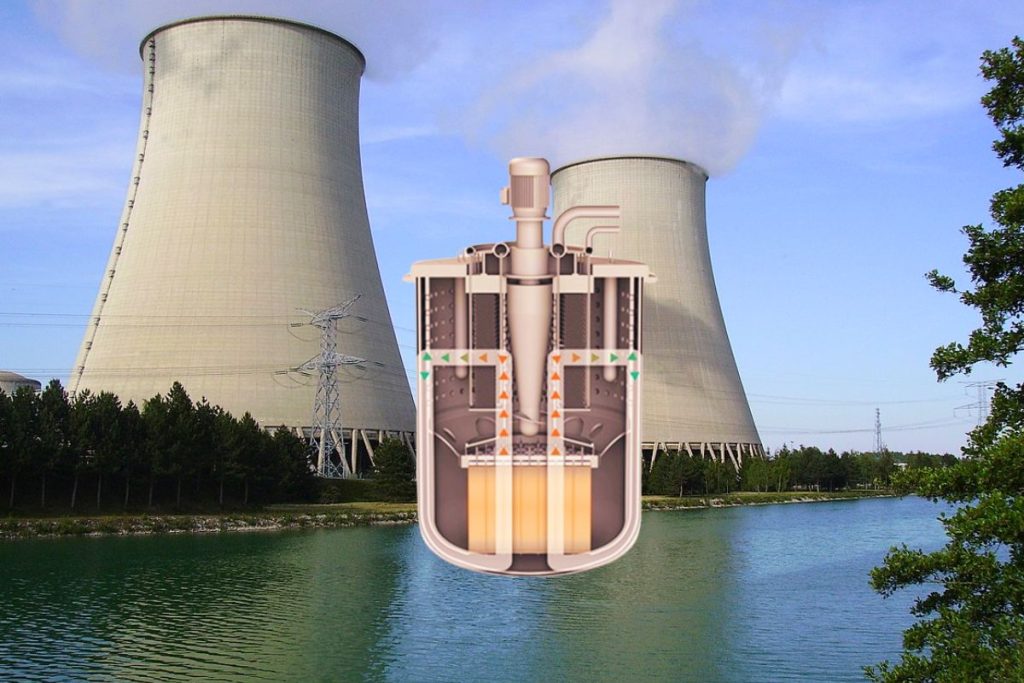
Image: Cross-sectional view of Newcleo’s reactor in front of the Nogent-sur-Seine nuclear power plant